Welcome to our savory sanctuary, where we invite you to indulge in culinary journeys through India— a land where every dish tells a story, and every meal is an experience. Thank you for subscribing to our newsletter and letting us share our love of India, food and travel with you.
The image above is the Naan Bukhara, served at Bukhara – the world-famous restaurant in ITC Maurya, our preferred hotel in New Delhi. It is the biggest Naan you will ever see – it is perfect for sharing, and the sheer size has always captivated diners. Try it with Bukhara’s signature authentic delicacy ‘Daal Bukhara’ which is slow cooked overnight.
Contrary to the global trends of menus changing once or twice a year, the Bukhara menu has not changed since it was established 45 years ago! An open kitchen allows guests to watch chefs skewer variety of meat and vegetables to cook in the tandoor. Just like it was done in the olden days of meal sharing, diners are invited to enjoy the meals with their bare hands; cutlery is not provided.
We are giving final touches to a tour planned for October next year. It is going to be another fabulous itinerary planned around enjoying a festival, jewellery, fashion, shopping and some incredible culinary experiences. Please follow us on social media to get the updates on new tours and other exciting bits about foodie experiences in India.
DESTINATION OF THE MONTH
JODHPUR
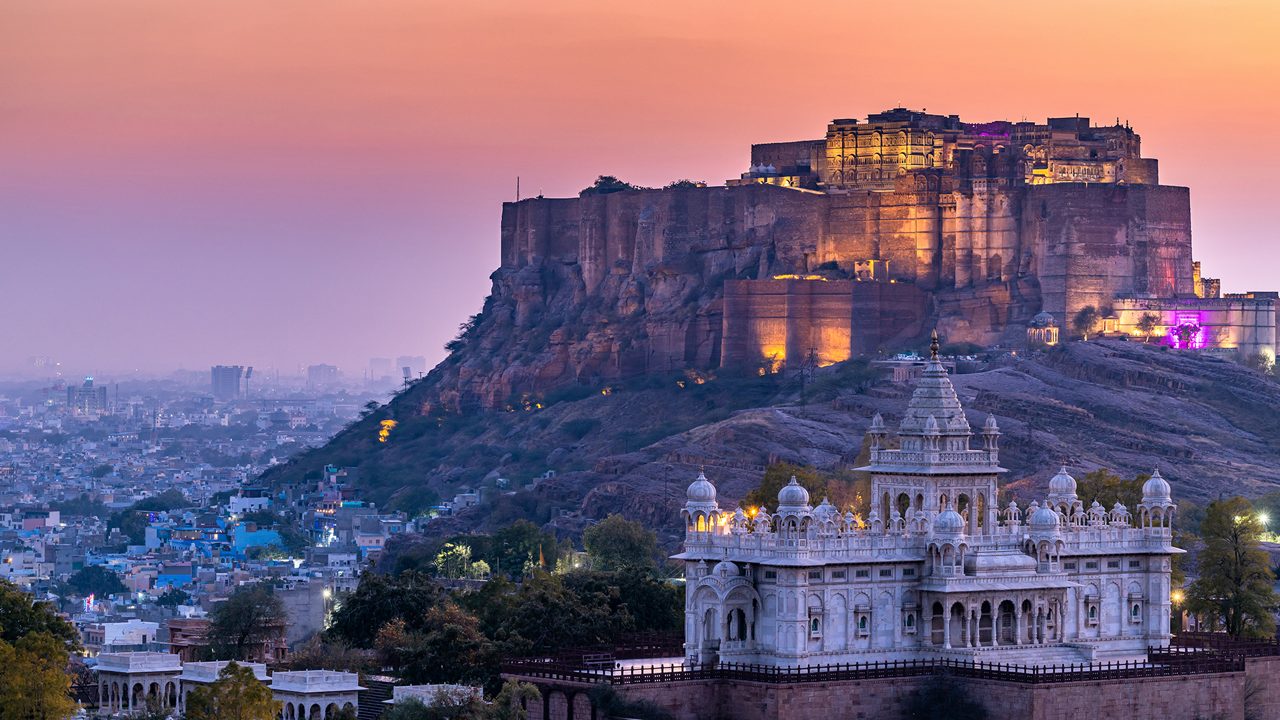
Jodhpur was founded in 1459 by Rao Jodha of the Rathore clan, rises majestically from the rocky ridges of the Thar desert. Known as the Blue City, its indigo-painted houses are a signature sight – originally done by residents to mark their homes, keep interiors cool, and ward off pests. The city with a population of about 1.6 million is famous for spice markets, artisans crafting silver jewellery and hand-dyed textiles.
Overlooking it all is the mighty Mehrangarh Fort, perched 400 feet above the city. Its walls echo tales of battles, diplomacy, and survival in harsh desert lands. One fascinating legend says that a hermit cursed the fort during its construction, and a man was buried alive in the foundations to appease the spirits – a story that adds to its aura of mystery. Stepping inside the fort is like walking through centuries of royal life. Its sprawling courtyards are surrounded by palaces, temples and step wells.
In the 16th century, Rao Maldeo Singh, one of Jodhpur’s most fearless rulers, faced a surprise attack on the city by rival forces. Outnumbered, he led from the front, rallying his soldiers and using the fort’s walls and gates with masterful strategy. Legend has it he even fought on the ramparts himself, inspiring his men to repel the invaders. Not only did Jodhpur survive, but Rao Maldeo turned the battle around, capturing key enemy leaders and securing alliances that strengthened his kingdom for years. Our guides have some fascinating stories to tell when you visit the Mehrangarh Fort.
CHEF INTERVIEW
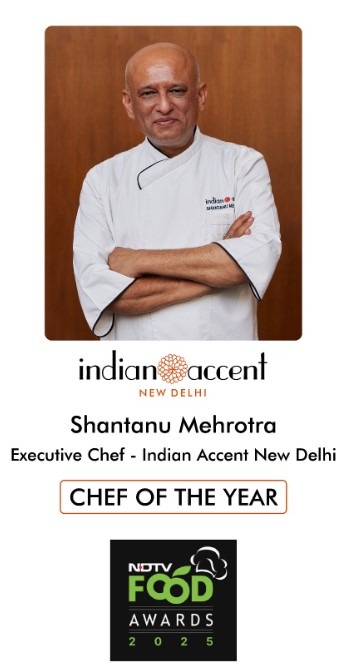
This month, we’re excited to feature an exclusive interview with Chef Shantanu Mehrotra of Indian Accent, one of India’s most celebrated fine-dining restaurants. Indian Accent has won numerous accolades, including Best Modern Indian Premium Dining Restaurant at the 2025 NDTV Food Awards, #1 restaurant in India multiple times by Condé Nast Traveller, and a spot on Asia’s 50 Best Restaurants list for 13 consecutive years. Chef Shantanu himself was recognized at T
What first inspired you to become a chef, and how did your journey bring you to Indian Accent?
To start with, I was pretty excited when I used to watch my grandmother cook. It was basic stuff like pickles and everything, but completely homemade. Even the Pappads and Chips were made at home from scratch. And then one of knowns mentioned that if you wish to go, you can go ahead with this as a career. So, she was my original MasterChef. And then my mother also is in a similar fashion. She also inculcated the same habits.
What is your earliest memory of cooking?
As I mentioned about making pickles and pappads at home with my grandmom during festive season, how to make puris and prepare dosa at home. All of those are my early memories of cooking. Because at that time we didn’t have that liberty to get pre-mixes. There was a proper way to do everything and I learnt it all at home only – how to make the dough, how to do the filling, how fry/cook it. So those things, yes.
Who is your culinary hero?
There have been many chefs and bosses who have shaped my career. To begin with the biggest one, the Chef Manish Mehrotra. He’s been a guru to me. With Chef Manish, we worked together on and off since 2000. So pretty long time back when we were at Indian Habitat Center. So interaction was always there. Then when we opened up Indian Accent since then, the rest is history.
What is your favourite cuisine?
Ah. Quite a few, I would say. Thai food, quite close to how Indian food is. They heavily rely on the freshness of an ingredient. And then in the Middle East, I would eat definitely any time, Lamb Shawarma, with Pita and Hummus, and you don’t eat anything else.
You’ve been with Indian Accent since it opened in 2009. How has your vision of “inventive Indian cuisine” evolved over these years, especially as tastes both in India and abroad have changed?
Again, I would say that how we can play around with food, keeping the taste intact, but adding some international ingredients into your dishes and present Indian food to the world, how it is supposed to be. And that is our vision. For example, we started our famous Blue Cheese Naan (bread) in 2009, when we started Indian accent. It’s a combination of two different but very similar dishes – Paneer Kulcha (Indian) and Blue Cheese with Bread (Europe). We replaced that blue cheese with paneer and used Indian cooking method in Tandoor. So this is what it is all about.
Is there a dish that you’re working on that you might like to share with us?
I’m still working on one of the dishes. It’s a variation of your regular pasta but with Bengali notes. So I’m trying to do a mustard cream sauce with pasta, with chicken/veggies. This will be made with Bengali Kasundi (Bengali Mustard Sauce). We’re in the process of it. Let’s see how the final dish comes out.
What is your favourite dish on your restaurant menu?
Ah. Quite a few, I would say. The Potatoes Sphere Chaat & Pork Ribs. Also, Ghee roast Lamb – which is an interactive dish. It caters to every taste bud on the table. It has mutton on one side, then rumali roti on the other, with four different chutneys – chilli chutney, coriander chutney, garlic-pepper chutney and a date chutney. The dish tasted different with each chutney.
What’s the most unusual food combination you secretly enjoy?
I do a great Maggie (instant noodles), in a soupy style, with tomato ketchup added to it. And I know you may think that’s a crime but it tastes really good. It should not be too overpowering. Like, if you’re making one packet, just add half teaspoon of ketchup, with fresh coriander and black pepper. It completely changes the taste!
RAJASTHANI CUISINE
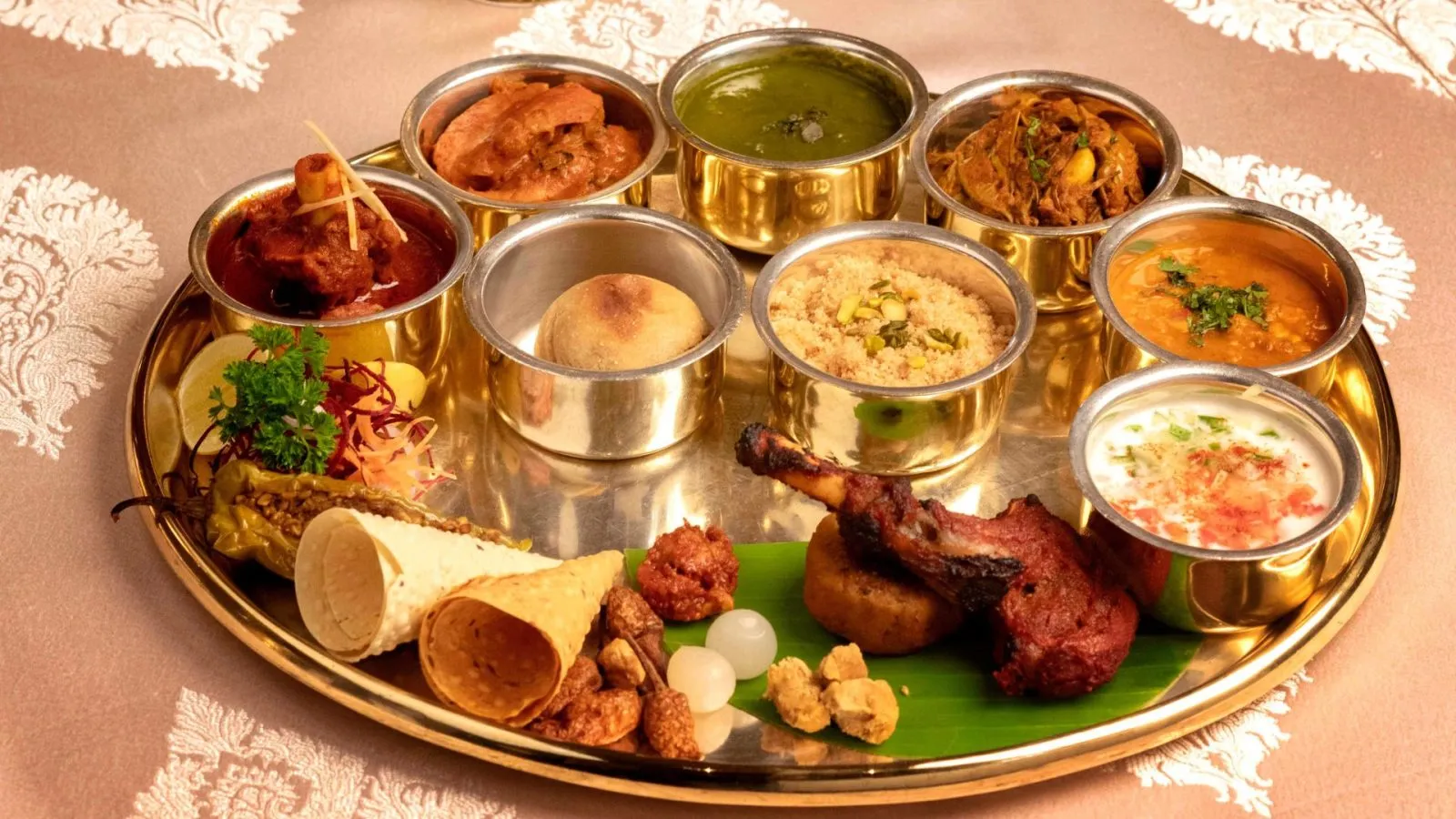
Rajasthani cuisine is as bold, colourful, and vibrant as the deserts and palaces of the state itself. Limited water and harsh climates of the Thar Desert gave rise to a cuisine that is hearty, deeply spiced, and often preserved with clever techniques like drying, pickling, or slow cooking.
Needless to say, the cuisine is also deeply influenced by its royal heritage. Many dishes, once reserved for the palaces of Udaipur, Jodhpur, and Jaipur, are still celebrated today for their rich flavours and presentation. The use of dried fruits, saffron, ghee, and exotic spices adds layers of taste and luxury, reflecting the grandeur of Rajasthan’s courts. At the same time, the street food in Rajasthan is one of the yummiest I have ever tasted.
Rajasthan is the largest state in India. The vast geographical spread also means there are so many cultures and traditions within the state. Some of the communities love their meat, while others who are strictly vegetarian won’t even eat onion and garlic for religious reasons. For them, the seasonal vegetables, lentils, and grains are used in dishes that are robust, satisfying, and full of flavour. It is the most popular and visited state in India by a mile, and if you are a vegetarian, you are in for a treat!
MATHIANA CHILI
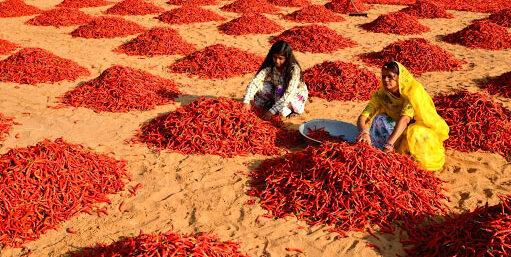
Just 35 km from Jodhpur, the village of Mathania is renowned for producing one of India’s most distinctive and flavorful red chilies, the Mathania chili. This long, slender variety is celebrated for its deep red hue, moderate heat, and subtly smoky, earthy sweetness. Unlike other chilies that may overpower a dish, Mathania chilies enhance the flavor profile, adding a rich color and a balanced warmth.
Integral to Rajasthani cuisine, Mathania chilies are a key ingredient in signature dishes like Laal Maas and Ker Sangri, where they impart both heat and a vibrant red color. They are also used in chutneys, pickles, and as a garnish to elevate the culinary experience.
According to local legend in Rajasthan, Mathania chilies are cultivated using soil enriched with ashes from burial grounds. It is said that the ashes impart a unique intensity and heat to the chilies, enhancing their pungency and flavor.